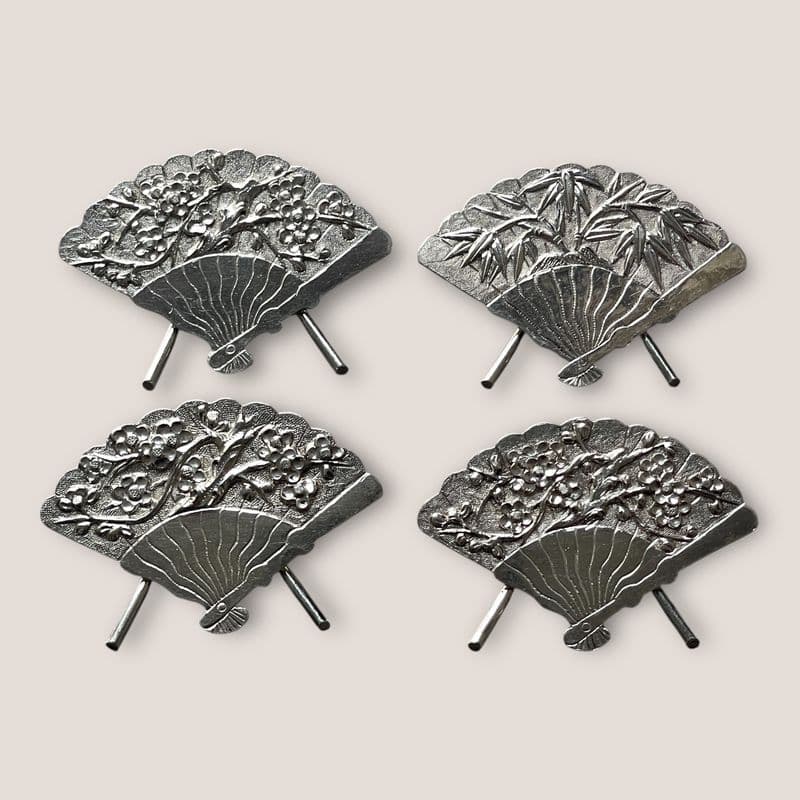
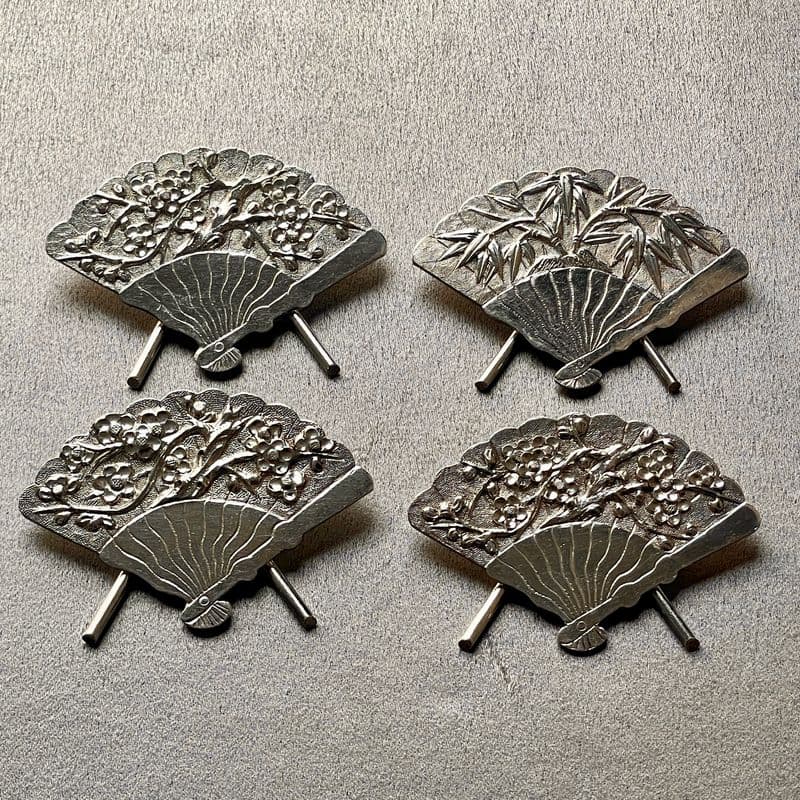
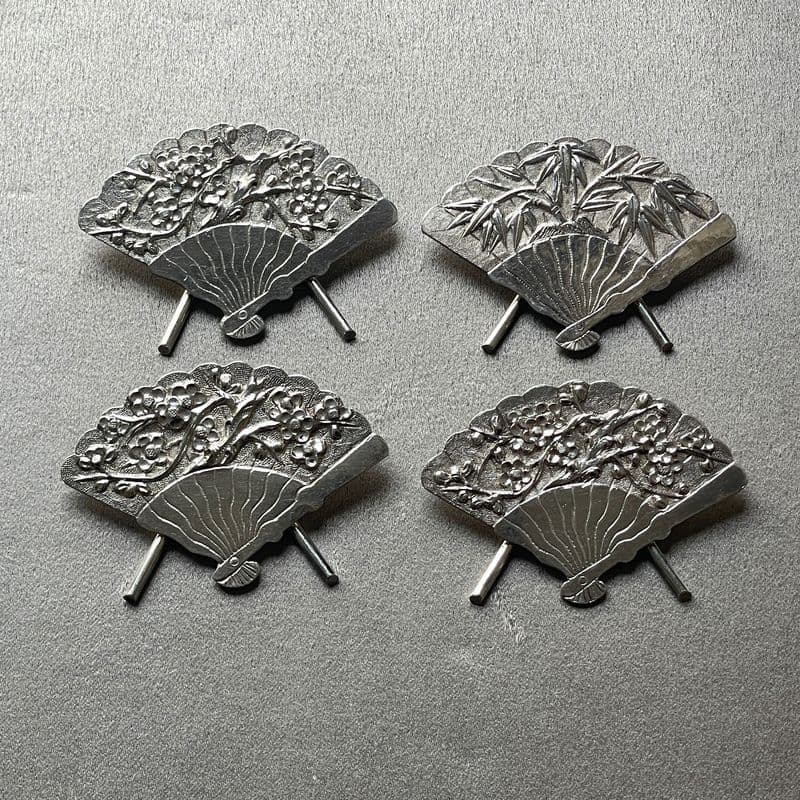
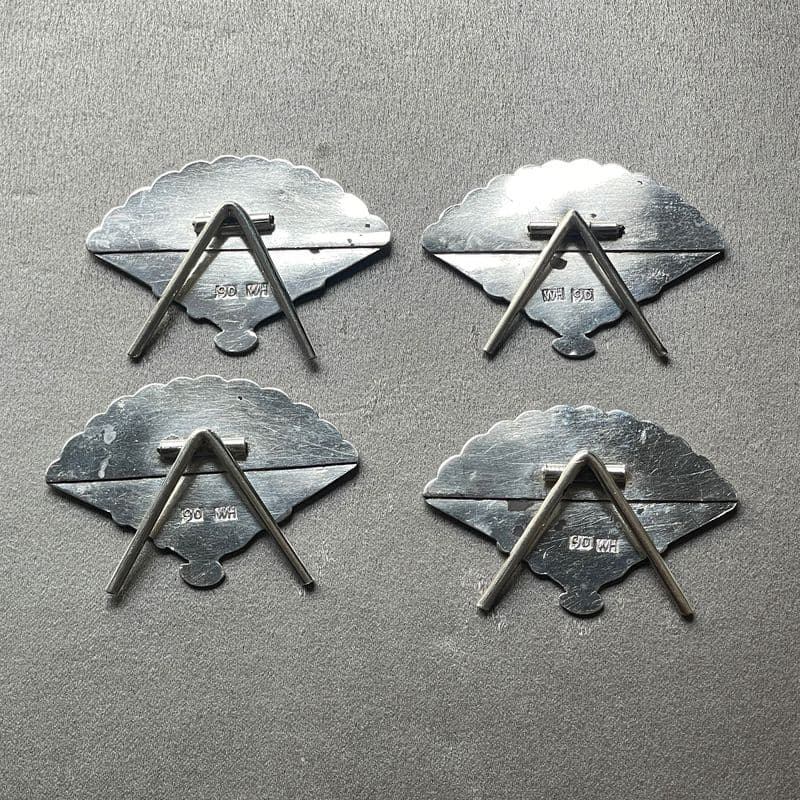
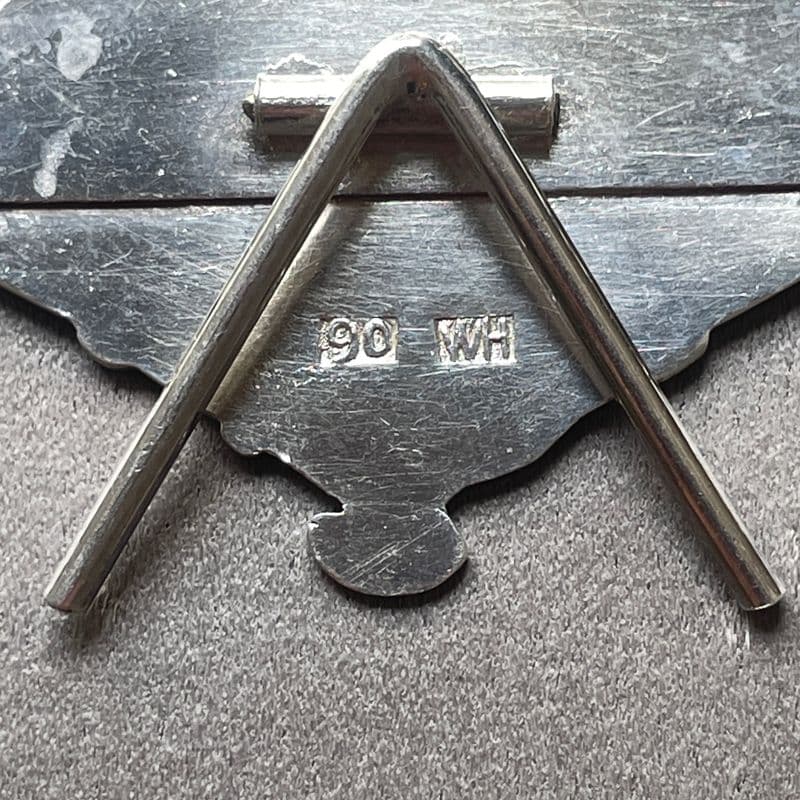
Set of 4 Rare Chinese export silver menu or card holders by Wan Hing.
Circa 1900
Description
Set of 4 Rare Chinese export silver menu or card holders by Wan Hing. 53x36 mm each; 59.37 grams total weight. Widely regarded as the most distinguished Chinese Export retailer, Wang Hing began operations in Canton shortly after 1842—a pivotal year marked by the end of the First Opium War and the signing of the Treaty of Nanking, which opened China’s ports to foreign trade and established Hong Kong as a British colony. The name ""Wang Hing"" was adopted by the Lo family, who founded the business and successfully passed it down through several generations until 1941. While the identity of the original founder remains unknown, historical records indicate that the Lo family were affluent merchants residing in Xiguan, one of Canton’s most prosperous and vibrant districts. Renowned for the exceptional craftsmanship of its pieces and the business acumen of its proprietors, the firm’s reputation steadily grew. By the 1920s, Lo Hung Tong, the founder’s grandson, had expanded the business by opening retail locations at 10 Queen’s Road in Hong Kong and in Shanghai. Wang Hing’s silverworks gained popularity among Western clientele, who frequently commissioned elaborate trophies and presentation items adorned with traditional Chinese motifs such as dragons, bamboo leaves, and prunus blossoms. The business came to a halt in 1941 when the Japanese invasion forced the Lo family to flee to mainland China, bringing an end to the firm’s operations." Inv: 5998D251N302
Description
Set of 4 Rare Chinese export silver menu or card holders by Wan Hing.
53x36 mm each; 59.37 grams total weight.
Widely regarded as the most distinguished Chinese Export retailer, Wang Hing began operations in Canton shortly after 1842—a pivotal year marked by the end of the First Opium War and the signing of the Treaty of Nanking, which opened China’s ports to foreign trade and established Hong Kong as a British colony.
The name ""Wang Hing"" was adopted by the Lo family, who founded the business and successfully passed it down through several generations until 1941. While the identity of the original founder remains unknown, historical records indicate that the Lo family were affluent merchants residing in Xiguan, one of Canton’s most prosperous and vibrant districts.
Renowned for the exceptional craftsmanship of its pieces and the business acumen of its proprietors, the firm’s reputation steadily grew. By the 1920s, Lo Hung Tong, the founder’s grandson, had expanded the business by opening retail locations at 10 Queen’s Road in Hong Kong and in Shanghai. Wang Hing’s silverworks gained popularity among Western clientele, who frequently commissioned elaborate trophies and presentation items adorned with traditional Chinese motifs such as dragons, bamboo leaves, and prunus blossoms.
The business came to a halt in 1941 when the Japanese invasion forced the Lo family to flee to mainland China, bringing an end to the firm’s operations."
Inv: 5998D251N302
